On March 5, 2026, the FDA published a final rule that will fundamentally change how National Drug Codes (NDCs) are structured in the United States. If you work anywhere in the pharmaceutical supply chain—from manufacturing to pharmacy to healthcare IT—this change will affect you. Here’s what you need to know.
What’s Changing?
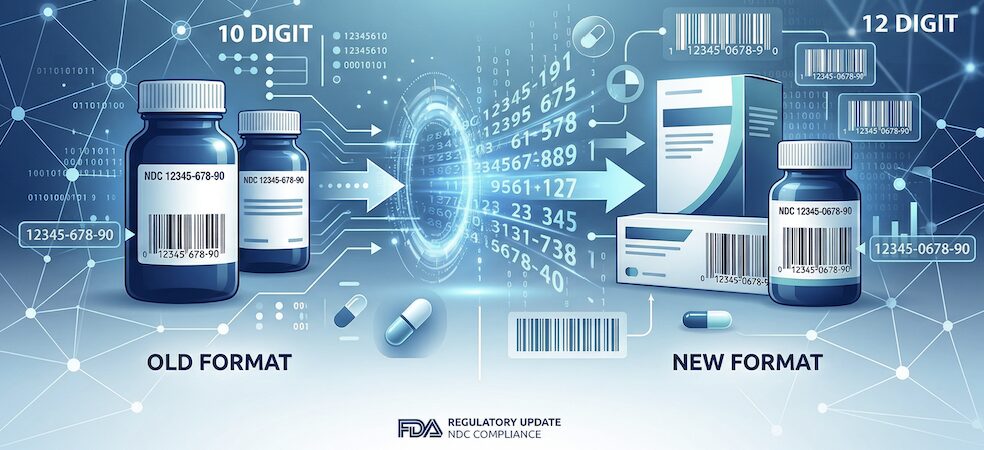
The FDA is standardizing the NDC format to a uniform 12-digit structure. Every NDC will now follow the same pattern: 6-4-2 format (6-digit labeler code, 4-digit product code, 2-digit package code).
Currently, NDCs exist in multiple formats—4-4-2, 5-3-2, and 5-4-1—all totaling 10 digits. This variability has created confusion, conversion errors, and inefficiencies across the healthcare industry for years. The new rule eliminates this complexity by establishing one standard format that everyone will use.
Why This Matters
The current system requires constant conversion between FDA’s native NDC formats and the 11-digit HIPAA standard format used by payers and providers. This conversion process introduces opportunities for errors that can affect everything from insurance claims to medication dispensing.
With a single, uniform format, the healthcare industry can eliminate conversion errors, reduce quality control burdens, and improve data integrity across the entire supply chain. The FDA estimates this will help prevent medication errors and reduce confusion that could pose risks to public health.
Timeline: You Have Seven Years to Prepare
The rule becomes effective on March 7, 2033—exactly seven years from publication. This extended timeline gives the industry substantial time to update systems, modify databases, and prepare for the transition.
Here’s what the timeline looks like:
Now through March 2033: Preparation period
-
Update your IT systems to handle 12-digit NDCs
-
Begin planning for label changes
-
Coordinate with vendors and partners
March 7, 2033: Effective date
-
FDA begins assigning all new NDCs in 12-digit format
-
All existing 10-digit NDCs must convert to 12-digit format
March 2033 – March 2036: Three-year transition period
-
Products with old 10-digit NDCs can remain in commerce
-
Firms should update labeling as soon as possible
-
Both formats may coexist during this window
How to Convert Your Existing NDCs
Converting a 10-digit NDC to the new 12-digit format is straightforward: add leading zeros to the appropriate segments.
Examples:
-
5-3-2 format: 12345-678-90 becomes 012345-0678-90
-
4-4-2 format: 1234-5678-90 becomes 001234-5678-90
-
5-4-1 format: 12345-6789-0 becomes 012345-6789-00
The FDA considers this conversion a ministerial, administrative change—not the assignment of a “new” NDC. Your converted NDC is the same NDC in a different format. This means no new user fees, no renegotiation of pricing or rebates, and no disruption to your product’s regulatory status.
What About Barcodes?
The final rule also updates barcode requirements to provide more flexibility. You can now use either linear or nonlinear (2D) barcodes on drug product labels, as long as they conform to FDA-recognized standards. This gives manufacturers more options for managing label space, especially on smaller packages.
Why 12 Digits? Why Not Alphanumeric?
Many industry stakeholders suggested using a 5-character alphanumeric labeler code instead of expanding to 12 digits. While this approach had merit, the FDA ultimately rejected it due to patient safety concerns.
Alphanumeric codes introduce significant potential for confusion. Letters can be misread as numbers and vice versa—”O” looks like “0,” “I” looks like “1,” “G” looks like “6,” and so on. The Institute for Safe Medication Practices has documented extensive confusion between alphanumeric symbols, even in typed or electronic formats.
A numeric-only system is simply safer. It reduces cognitive load, minimizes transcription errors, and eliminates phonetic confusion (like mistaking the letter “A” for the number “8” when reading aloud).
The Math: Will 12 Digits Be Enough?
Absolutely. The FDA currently assigns about 1,000 new labeler codes per year. Expanding from 5-digit to 6-digit labeler codes adds approximately 900,000 new labeler codes to the available pool. At current assignment rates, this provides a 900-year supply of labeler codes. This solution is designed to be future-proof for generations.
Impact by Stakeholder: Who’s Affected and How
This NDC format change will touch every part of the pharmaceutical supply chain, but the specific impacts vary by role. Here’s what different stakeholders need to know:
Manufacturers and Repackagers
Primary Impact: Labeling updates and system modifications
You’ll need to update product labeling to reflect the new 12-digit NDC format. The good news? You have the three-year transition period to work through existing inventory, so you won’t need to immediately relabel products already in the supply chain.
Key Actions:
-
Update label artwork and printing specifications for all products
-
Modify registration and listing systems to generate 12-digit NDCs
-
Coordinate with contract manufacturers and packaging partners
-
Update barcode generation systems (you now have flexibility to use 2D barcodes)
-
Revise product master data in ERP and quality systems
-
Plan label changes to coincide with routine label updates when possible to minimize costs
Timeline Consideration: Start incorporating 12-digit NDCs into new product launches and major label revisions before the 2033 deadline to spread out the transition costs.
Wholesale Distributors and Repackagers
Primary Impact: Inventory management and order fulfillment systems
Distributors will need to handle both 10-digit and 12-digit NDCs during the transition period, which means your systems must be capable of recognizing and processing both formats simultaneously.
Key Actions:
-
Upgrade warehouse management systems (WMS) to accommodate 12-digit NDCs
-
Update order processing and fulfillment systems
-
Modify inventory tracking and lot management systems
-
Ensure DSCSA serialization systems can map to the new NDC format
-
Update EDI transaction formats and trading partner communications
-
Train warehouse staff on the new format to prevent picking and shipping errors
-
Coordinate with manufacturers on timing of format changes
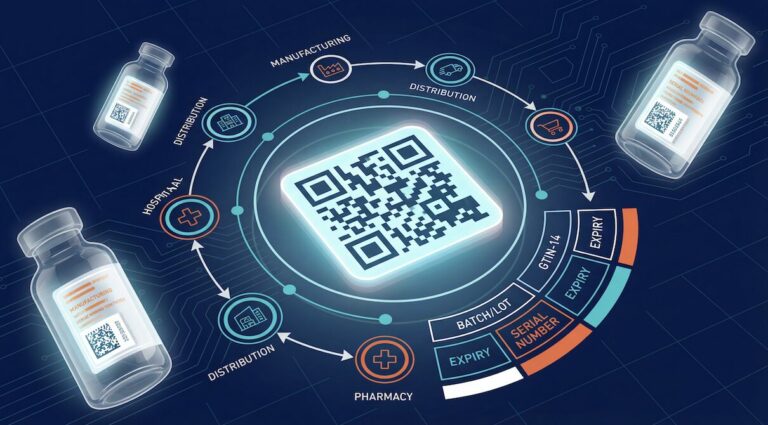
Critical Note: The NDC is a key component of the product identifier required under DSCSA. Your serialization and traceability systems must correctly link serial numbers to the new 12-digit NDC format.
Retail and Hospital Pharmacies
Primary Impact: Pharmacy management systems and dispensing workflows
Pharmacies will experience the change primarily through their pharmacy management systems, but the human element is critical—pharmacists and technicians will need to verify NDCs during dispensing.
Key Actions:
-
Work with your pharmacy system vendor to ensure software updates support 12-digit NDCs
-
Update formulary databases and drug files
-
Modify prescription labeling systems
-
Train pharmacy staff to recognize both formats during the transition period
-
Update inventory management and purchasing systems
-
Revise automated dispensing cabinet (ADC) configurations
-
Ensure e-prescribing systems can handle the new format
-
Update medication verification procedures
Patient Safety Focus: During the transition period, extra vigilance is needed when visually comparing NDCs on prescription labels to source bottles, as both 10-digit and 12-digit formats may be in use.
Healthcare Providers and Health Systems
Primary Impact: Electronic health records (EHR) and clinical systems
Hospitals and health systems will need to update multiple interconnected systems that use NDCs for medication ordering, administration, and documentation.
Key Actions:
-
Coordinate with EHR vendors on system updates
-
Update computerized physician order entry (CPOE) systems
-
Modify medication administration record (MAR) systems
-
Update clinical decision support systems that reference NDCs
-
Revise pharmacy information systems
-
Update billing and charge capture systems
-
Modify medication reconciliation workflows
-
Train clinical staff on the format change
Integration Challenge: Many health systems have complex interfaces between pharmacy, clinical, and billing systems. All integration points that pass NDC data will need testing and validation.
Payers and Pharmacy Benefit Managers (PBMs)
Primary Impact: Claims processing and formulary management
The current HIPAA standard uses an 11-digit format (5-4-2). While updating HIPAA standards is outside FDA’s authority, payers will likely need to adapt their systems to accommodate the new 12-digit format.
Key Actions:
-
Update claims processing systems to accept 12-digit NDCs
-
Modify formulary databases and drug pricing files
-
Update rebate management systems
-
Revise prior authorization systems
-
Coordinate with pharmacy networks on transition timing
-
Update member-facing tools (formulary lookups, cost estimators)
-
Ensure coordination with drug compendia vendors
Important Note: The FDA clarified that converting a 10-digit NDC to 12-digit format is NOT a “new” NDC. This means existing pricing agreements, rebate contracts, and formulary decisions remain valid—no renegotiation required.
Health IT Vendors and Software Developers
Primary Impact: Software development and testing across all product lines
If you develop software used anywhere in the pharmaceutical supply chain, you’ll need to update your applications to support the new format.
Key Actions:
-
Conduct comprehensive system analysis to identify all NDC fields and logic
-
Expand database fields to accommodate 12-digit NDCs
-
Update validation rules and edit checks
-
Modify user interfaces and data entry screens
-
Update reporting and analytics modules
-
Develop conversion utilities for historical data
-
Create dual-format support for the transition period
-
Conduct extensive testing with both formats
-
Coordinate release schedules with customer implementation timelines
-
Update API documentation and integration specifications
Development Timeline: Start development well before 2033 to allow adequate time for testing and customer implementation.
Drug Compendia and Data Vendors
Primary Impact: Database updates and data distribution
Organizations like First Databank, Medi-Span, and others that provide drug information databases will play a crucial role in the transition.
Key Actions:
-
Update master drug databases with 12-digit NDCs
-
Maintain mapping tables between 10-digit and 12-digit formats
-
Coordinate with FDA on the official conversion database
-
Update data distribution formats and specifications
-
Communicate changes to all customers well in advance
-
Provide conversion tools and resources
-
Support customers through the transition period
Critical Role: Many organizations rely on compendia for accurate NDC data. Your timely and accurate conversion will be essential for industry-wide success.
What You Should Do Now
Even though the effective date is seven years away, smart organizations will start preparing now:
-
Assess your systems: Identify all databases, software applications, and processes that use NDCs. Determine what modifications will be needed to accommodate 12-digit codes.
-
Engage with vendors: Talk to your software vendors, data providers, and business partners about their readiness plans.
-
Plan for dual-format support: During the transition period, your systems will need to handle both 10-digit and 12-digit NDCs simultaneously.
-
Budget appropriately: The FDA estimates industry-wide annualized costs of approximately $14.6-14.9 million. Understand what your share of these costs might be.
-
Stay informed: The FDA plans extensive outreach and communication efforts over the next seven years. Participate in industry discussions and monitor FDA guidance.
-
Use FDA resources: The FDA intends to publish a database mapping 10-digit NDCs to their 12-digit equivalents. This will be an invaluable tool during the transition.
The Bottom Line
This change represents a significant improvement to a system that has needed standardization for decades. While any format change requires investment and effort, the long-term benefits—reduced errors, improved efficiency, and enhanced patient safety—make this transition worthwhile.
The seven-year implementation timeline provides ample opportunity to prepare. Organizations that start planning now will be well-positioned to navigate the transition smoothly and may even gain competitive advantages by being early adopters of the new format.
The pharmaceutical industry has successfully managed major transitions before, from the implementation of DSCSA serialization requirements to the adoption of electronic prescribing. With proper planning and coordination, the shift to 12-digit NDCs will become just another milestone in the ongoing evolution of pharmaceutical supply chain excellence.
For more information, visit the FDA’s National Drug Code Directory or contact the FDA representatives listed in the final rule published in the Federal Register on March 5, 2026 (Docket No. FDA-2021-N-1351).